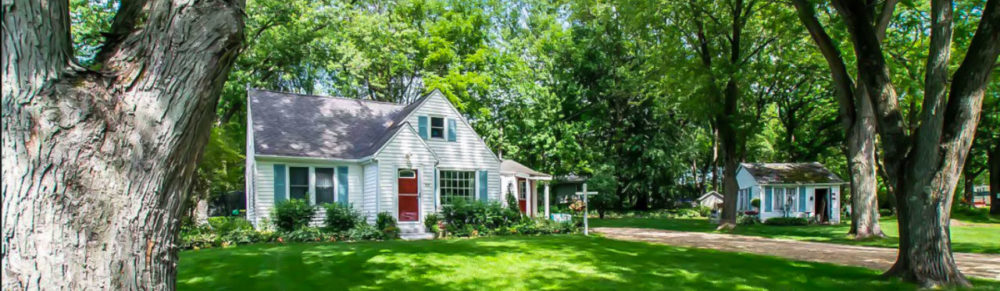

When I first bought this property I knew I was going to do something with the small cabin, I just didn’t know what yet. I knew nothing about it but I knew it had some potential… some reason to continue on even though it was in pretty bad shape. The paint was peeling badly, in desperate need of scraping and re-coating, the roof had large holes, and where there weren’t holes there was a thick layer of moss. The ancient steel gutters were rusted and leaking, and mostly filled with its own ecosystem of lichen and small trees that had started growing out of the detritus. Everyone told me I should just tear it down and build something new. My home owner insurer, and I won’t say who that was at the time for reasons that are about to become clear, told me that should the tiny cabin accidentally burn down, they would give me $20k for it. But I was unmoved, and maybe that has something to do with my love for all things classic, or my mad desire to fix things rather than throw them out, or the hubris that I can always make things better than they currently are. Whatever the reason, I simply had no intention of destroying the cabin.
I took ownership of the house and moved right into preparing the main house to be a short term rental as I was still living and working in Los Angeles at the time. The cabin became a place to store camping and water sports equipment while it otherwise remained neglected and continued to degrade. And each time I would come back from California I would notice new cracks in the windows of the cabin which I couldn’t explain, but had me concerned. This began the process of looking into options to save the cabin
Now at this point, I still had no idea what this cabin was doing there in the first place. I did not know the history of it, how old it was, nor why it had been abandoned in the first place. I spoke with the neighbors who had only vague guesses and rumors about it, but what was becoming clear was that my cabin was not the only one that had existed in my small enclave. For a fact, two others had been nearby but both had been expanded well beyond their tiny footprints into larger houses in which two of my neighbors were currently living. These homes looked absolutely nothing like my cabin. One of the other cabins had simply become the walls of the kitchen for my neighbors’ Rick and Debbie’s house, and the other had turned into the more sprawling ranch style home of Vera, a firecracker of a 90-year-old lady and the first neighbor I met after closing on my house. There is no way to tell that either of these homes could have ever been a tiny 200 square foot cabin. And apparently there were several others which had been demolished decades earlier to make way for newer, larger homes. But still no one had a clear idea how they got here in the first place.
One theory was that they used to be fishing cabins down by the lake, and that they had been moved up the hill to our little area many years ago to make way for the larger palatial homes that had staked out the lakefront, a theory I reckoned was far fetched. So I decided to start my own investigation which proved difficult as there were few resources from the history of a very rural Wisconsin lake area that only really started to become relevant when wealthy industrialists started to build grand homes along the lake front, and then all of that history was about them and their castles. And then one day I wandered into the Lake Geneva library and started talking to one of the librarians, who also had no clue what those cabins had been doing there, or why I would even care for that matter. But then she had a thought and recommended I talk to one of the other librarians who did have some research knowledge of the area, and that’s when I met Keith Gerlach the Facility and Technology Librarian of the Lake Geneva Library. He took an interest and told me to give him a few days to research the plats from the area at the turn of the century to see who had owned the land my property currently sits on. Enter Ulysses S Lockwood.


The Lockwood Tourist Camp would operate for more than a decade before the land was divided up into the individual properties that currently make up Lockwood Estates. To continue reading about my journey into Lockwood’s Last Cabin, go to the next post…