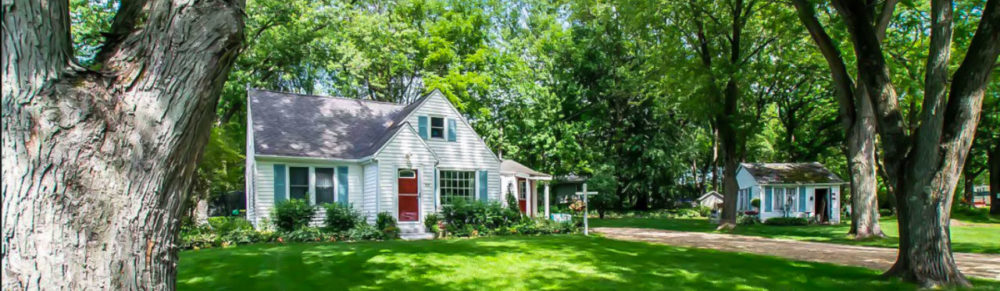
Lake Geneva has been voted the second best lake in the U.S. out of 479,950 that exist in the lower 48 states. This comes from a recent article in Travel+Leisure magazine published on June 20, 2024, and the result was decided by a panel of experts, and then voted on by readers of the magazine.
Here is the article in it’s entirety:
This Lake Was Just Named Best in the U.S. — and It Has Thousands of Undiscovered Shipwrecks
By Evie Carrick.
Published on June 20, 2024
Lake Erie is the shallowest, and therefore, the warmest of the Great Lakes — a fact that makes it great for fishing and diving.
Lake season is officially here, with everyone clamoring to find their little piece of waterfront paradise. And while the U.S. boasts three beautiful coastlines, it’s nothing compared to the 479,950 lakes that dot the lower 48 states. These lakes, big and small, provide respite from the summer heat with swimming, boating, fishing, and waterfront camping.
And while any of the 479,950 lakes can provide that cooling effect, some are set in picturesque landscapes, have crystal clear waters, or have a great boating community. But according to USA Today, Lake Erie, one of the five Great Lakes in North America, is the best in the nation.
To determine the best of the best, USA Today tapped a panel of experts to come up with a list of the nation’s best lakes, then, readers voted for their favorites. The result is 10 expert and public-approved lakes that range from behemoths like Lake Superior and Lake Tahoe to lesser-known spots like Lake Cumberland and Lake Austin, with Lake Erie in the No. 1 spot.
Lake Erie is split by the U.S.-Canada border and touches four U.S. states: New York, Pennsylvania, Ohio, and Michigan. It was carved out by advancing and retreating glaciers and remains the shallowest — and therefore, also the warmest — of the Great Lakes. The warm
waters also make Erie a popular fishing spot: it has steelhead, walleye, bass, perch, lake trout, king salmon, and whitefish, among others.
Lake Erie is also home to thousands of shipwrecks, which are popular among divers. One study estimates there are between 1,400 to 8,000 shipwrecks in Lake Erie, most of which are undiscovered and believed to be well preserved. Lining the shores of the lake are dunes, campgrounds, swimming beaches, and established wildlife and biosphere preserves. Two major U.S. cities (Buffalo, New York, and Cleveland) are perched on Lake Erie’s shores, providing an easy entry point to the lake.
Following Lake Erie on the list are two other Great Lakes and several Upper Midwestern lakes, followed by bodies of water in California, Idaho, Vermont, Texas, and Kentucky. The full list is below:
Lake Erie — New York, Pennsylvania, Ohio, Michigan
Geneva Lake — Wisconsin
Lake Superior — Michigan, Wisconsin, Minnesota
Lake Michigan — Michigan, Indiana, Illinois, Wisconsin
The Farmer Who Brought Visitors to Williams Bay a Century Ago
One hundred years ago, nestled among the rolling hills and sparkling waters of Williams Bay, a humble farmer made a decision that would help shape the town’s identity as a beloved retreat for generations to come. While others tilled the soil strictly for crops, Ulyses S Lockwood, a local farmer, chose to cultivate something different: a sense of wonder.
It was the early 1900s, and Lake Geneva was still a well-kept secret outside of the Chicago elite who visited seasonally. Ulyses, who had spent his life working the land passed down from his father, recognized that the real wealth of the area wasn’t just in the soil—it was in the scenic charm of the lake, the peaceful woods, and the gentle pace of rural life.
The Cottages That Changed Everything
The original Cabin Christmas
Instead of planting another round of corn on a small section of his property just north of the lake, Ulyses made a bold move. He cleared the land and, with the help of local carpenters, constructed a few tiny cottages—simple wood-frame structures with wide windows to catch the breeze off Geneva Lake, each with it’s own outhouse.
Word spread quickly.
What started as a quiet experiment soon became a local sensation. Visitors from Chicago, Milwaukee, and even as far as St. Louis came looking for a “country escape” with modern comforts. Families would stay for a weekend or a week, fishing on the lake by day and sharing stories by firelight at night. Some returned year after year, drawn not only by the lake’s natural beauty but also by the genuine warmth of their host.
Ulyses didn’t see himself as a hotelier or an entrepreneur. “I’m just a farmer who likes people,” he was known to say, often seen chatting with guests while handing out fresh eggs or sharing vegetables from his garden.
Planting the Roots of Lake Geneva Tourism
Unintentionally, Ulyses Lockwood had created one of the first destination lodgings in the Lake Geneva area outside the resort-style hotels of the city’s wealthier districts. His cottages inspired others—neighboring farmers followed suit, converting barns or building small cabins to welcome tourists.
Within a few decades, the area began to transform. Restaurants, bait shops, and boat rental businesses sprang up. Seasonal tourism became a central part of the local economy, and Lake Geneva’s reputation grew from a hidden gem to a Midwest treasure.
By the time Lockwood passed away in the 1950s, his small enclave of cabins had started to evolve into larger homes, or just be demolished to make way for other versions. His last original cottage—weathered and in dire need of repair—remained, serving as a quiet reminder of a visionary who saw the land not only for what it could produce, but for how it could be shared.
A Legacy That Endures
Today, the Lake Geneva area is a thriving destination, hosting tens of thousands of visitors annually. Yet, among the bustling lakefront and luxury accommodations, the spirit of Ulyses Lockwoods’ hospitality endures. The last of his cottages still stands on the property now known as Serenity and remains as a symbol of how one farmer’s simple idea helped sow the seeds of a community built on beauty, welcome, and rest.
It is in the spirit of this legacy that I’ve begun the transformation of Lockwood’s Last Cabin from a crumbling earthen floor cabin with gaping holes in the roof, and rotting doors and windows, into what will be a more modern tiny house with indoor plumbing and modern creature comforts.
In a world driven by big developments and flashy attractions, U.S. Lockwood’s legacy reminds us that sometimes, the best way to grow something meaningful is to make space for others to simply enjoy what’s already there.
When I first bought this property I knew I was going to do something with the small cabin, I just didn’t know what yet. I knew nothing about it but I knew it had some potential… some reason to continue on even though it was in pretty bad shape. The paint was peeling badly, in desperate need of scraping and re-coating, the roof had large holes, and where there weren’t holes there was a thick layer of moss. The ancient steel gutters were rusted and leaking, and mostly filled with its own ecosystem of lichen and small trees that had started growing out of the detritus. Everyone told me I should just tear it down and build something new. My home owner insurer, and I won’t say who that was at the time for reasons that are about to become clear, told me that should the tiny cabin accidentally burn down, they would give me $20k for it. But I was unmoved, and maybe that has something to do with my love for all things classic, or my mad desire to fix things rather than throw them out, or the hubris that I can always make things better than they currently are. Whatever the reason, I simply had no intention of destroying the cabin.
I took ownership of the house and moved right into preparing the main house to be a short term rental as I was still living and working in Los Angeles at the time. The cabin became a place to store camping and water sports equipment while it otherwise remained neglected and continued to degrade. And each time I would come back from California I would notice new cracks in the windows of the cabin which I couldn’t explain, but had me concerned. This began the process of looking into options to save the cabin
Now at this point, I still had no idea what this cabin was doing there in the first place. I did not know the history of it, how old it was, nor why it had been abandoned in the first place. I spoke with the neighbors who had only vague guesses and rumors about it, but what was becoming clear was that my cabin was not the only one that had existed in my small enclave. For a fact, two others had been nearby but both had been expanded well beyond their tiny footprints into larger houses in which two of my neighbors were currently living. These homes looked absolutely nothing like my cabin. One of the other cabins had simply become the walls of the kitchen for my neighbors’ Rick and Debbie’s house, and the other had turned into the more sprawling ranch style home of Vera, a firecracker of a 90-year-old lady and the first neighbor I met after closing on my house. There is no way to tell that either of these homes could have ever been a tiny 200 square foot cabin. And apparently there were several others which had been demolished decades earlier to make way for newer, larger homes. But still no one had a clear idea how they got here in the first place.
One theory was that they used to be fishing cabins down by the lake, and that they had been moved up the hill to our little area many years ago to make way for the larger palatial homes that had staked out the lakefront, a theory I reckoned was far fetched. So I decided to start my own investigation which proved difficult as there were few resources from the history of a very rural Wisconsin lake area that only really started to become relevant when wealthy industrialists started to build grand homes along the lake front, and then all of that history was about them and their castles. And then one day I wandered into the Lake Geneva library and started talking to one of the librarians, who also had no clue what those cabins had been doing there, or why I would even care for that matter. But then she had a thought and recommended I talk to one of the other librarians who did have some research knowledge of the area, and that’s when I met Keith Gerlach the Facility and Technology Librarian of the Lake Geneva Library. He took an interest and told me to give him a few days to research the plats from the area at the turn of the century to see who had owned the land my property currently sits on. Enter Ulysses S Lockwood.
Lake Geneva News, March 10, 1927Lake Geneva News, November 10, 1927Lake Geneva News, September 13, 1928
The Lockwood Tourist Camp would operate for more than a decade before the land was divided up into the individual properties that currently make up Lockwood Estates. To continue reading about my journey into Lockwood’s Last Cabin, go to the next post…
Every success story is built on a strong foundation. This the underlying basis for everything in the real world; it establishes permanence; and it is the lowest, and most important, load bearing part of a structure. Without a solid and strong foundation, a thing cannot exist for long.
In the case of my cabin, more than 100 years on a wooden foundation sitting directly on the soil was taking its toll. Every time I came back from the west coast I would notice new cracks in some of the windows. My initial thought was that people were somehow to blame for the broken glass, but it wasn’t as if they were broken by rocks or some kind of impact, and I soon realized that as the ground would freeze and thaw, or simply get saturated with rain, the building would shift slightly, and the old glass would just crack as their frames slowly twisted under the pressure of Mother Nature. The old building was crying for help.
Before
At the same time I was under pressure from a different type of force. The nearby town, in whose Ward my property sits, was sending me notices that my cabin was in a dilapidated state, and had to be brought up to safe standards, or torn down within a certain time frame. The county, on the other hand, was refusing to give me a permit to do any work on the building. Time and pressure can be mighty forces when working together: a long amount of time and an immense amount of pressure can turn coal into a diamond. In my case, the pressure I was getting from the town was working in opposition to the amount of time I was wasting trying to convince the county that my cabin was significant and worthy of saving, and with those forces working against each other I could see that the outcome was potentially disastrous. Since the forces of mankind were currently working against me, I decided that something had to be done to give the cabin more time if it were to have a fighting chance, and so I developed a plan to put a solid foundation under it, and stop the cabins decay at the hands of Mother Nature.
There has always been for me an extremely satisfying feeling to look at a problem, come up with a solution for, and implement it, no matter how difficult or scary it may seem. Putting a foundation underneath this frail old cabin was certainly that: I would have to somehow pour a solid concrete footing underneath the walls of the standing building without destroying the integrity of the structure or any of it’s beautiful old cedar siding. Which meant, of course, I would have to lift the building straight up off of it’s crumbling wood floor from the inside, dig trenches under the walls, pour the concrete, and then set the building back down onto the cured concrete in one piece. This did involve some research and math which I won’t go into here, but I’ll mention now that I do have some Engineering experience, so I would have to caution against doing something of this magnitude on the basis of “I believe this can work”. The “Hold My Beer” school of thought is not something I tend to lean into, so my confidence that I could make this work did have some grounding in experience, science and physics.
My solution to raise the cabin off of the ground involved building an internal framework that I would bolt to the existing wall studs inside the cabin. This would keep the structure solid and intact and allow the entire weight of the cabin to transfer into 2 triple beam supports that would run across the cabin and allow me to jack up the building from the inside. But before I could do all of that, I had discovered that a Robin had flown into the cabin through one of the holes in the roof, built a nest up in the roof joists and laid 3 perfect eggs. Once again, time and nature had conspired against me in my race to save Lockwood’s last cabin.
The American Robin is not only the State bird of Wisconsin, they are protected under the Bird Migratory Treaty Act and so there was nothing for me to do but wait. But it wouldn’t be too long; Robin eggs gestate for about 2 weeks, and then it’s only about as long before the chicks leave the nest. In the bigger sense, the cabin had lasted for over 100 years and I didn’t feel that a few more weeks were going to matter. Fortunately it was spring and the weather was beautiful and Wisconsin is such a lovely place to hike, enjoy nature and of course, take advantage of Lake Geneva, the second most beautiful lake in the United States according to Travel and Leisure Magazine.
Once my tiny squatter issue was resolved, I began the process of securing the old Cabin on a new, strong footing. I did this by bolting 2×10 boards to the wall studs, and then created the 2 triple beams, also out of 2×10 boards, that would attach under the frame, pushing on the frame and not the walls of the cabin, thereby transferring the entire weight of the building evenly across the beams and onto the jacks. Once that was all built, I placed four 2-ton hydraulic jacks under the triple beams, took a deep breath and started to slowly inch the building up, one jack at a time. When I started to see daylight underneath the bottom plates of the cabin I knew we were on the right path to saving the old structure.
I kept jacking, and building safety pylons out of 4×4 lumber along the way until the building was about 18” off the ground. That gave me just enough room to excavate the dirt under the walls to allow for the pouring of a 12” wide, 12” deep concrete footing to serve as the permanent new beginning for Lockwood’s Last Cabin.
Now you may be thinking, if I can do all of that work without a permit, why not just continue forward? Technically, that work; pouring a relatively small amount of concrete, amounted to less than 100 square feet of construction, and by code, did not require any type of permit or dispensation from the County or local Building Department. And so now I had bought some time for the structure as it would no longer continue to twist and creak into a slow, sad ending. We slapped some new paint on the siding as a kind of victory dance, but the holes in the roof still presented a problem for the town, and though the cabin was no longer decaying, it would still need some major renovation work, and that could only start once I convince the County to change it’s mind. A feat I severely underestimated…
Stay tuned for the next installment of this old cabin…
Serenity has recently been added to the collection of AirBnB Guest Favorites. The relatively new metric Guest Favorite is a rating that the platform uses to help travelers find the most-loved places to stay based on ratings, reviews, and reliability.
Airbnb has more than 7 million homes all over the world. Each home is one-of-a-kind, and this uniqueness is what sets Airbnb apart. But with so much variety, it can also make it hard to know what you are going to get when planning your vacation travel. There has always been a 5 star rating system to help you choose the right place, but now with Guest Favorites you will be able to see which homes past guests have loved the most. Here at Serenity I couldn’t be more proud of this designation as it has always been planned to be a place for people to come and enjoy, and experience something beyond their day-to-day.